
More than 10 million Pokemon cards were sold on Whatnot during September 2026, setting a new monthly record for the live shopping platform. The milestone comes as Pokemon celebrates its 30th year, with a growing number of collectors buying cards through livestream auctions, pack openings, and individual card sales.
According to Whatnot’s newly released 2027 Consumer Trends Report, an average of four Pokemon cards are sold every second on the platform. Pokemon order volume and the number of buyers have also more than doubled compared with the previous year.
The figures offer a different look at the Pokemon card market than the multimillion-dollar auction results that have dominated recent headlines. While rare cards continue to attract enormous bids, Whatnot’s data suggests that everyday collecting activity is expanding as well.
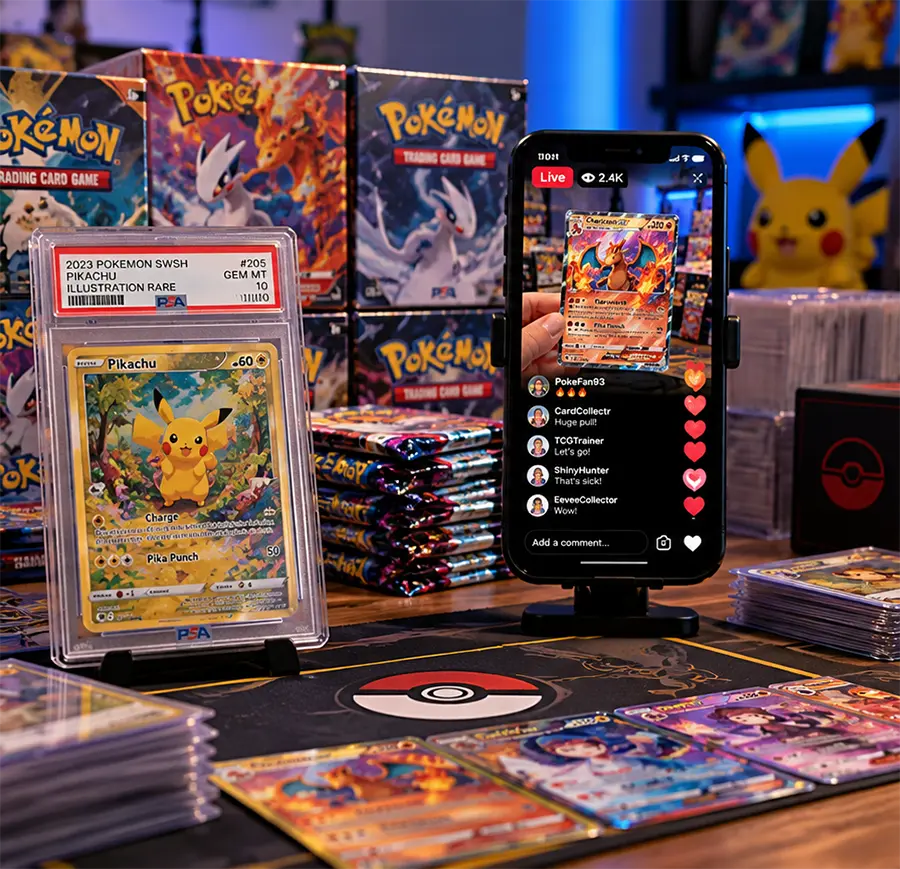
Pokemon Card Sales Reach a New Monthly Record
September was Whatnot’s biggest month ever for Pokemon card sales, with more than 10 million individual cards changing hands.
That works out to an average of more than 333,000 cards per day during the month, although actual sales activity would have varied considerably between days.
Whatnot also reported its highest-selling Pokemon week during the summer, suggesting that the September record was part of a broader period of elevated activity rather than an isolated spike.
The company attributed much of the growth to Pokemon’s 30th Celebration, which has brought renewed attention to the trading card game through new products, promotional releases, and collector interest.
Perhaps the most significant figure is the number of new buyers. Whatnot reported that hundreds of thousands of people purchased Pokemon cards on the platform for the first time during 2026.
The company did not provide an exact number of first-time Pokemon buyers or disclose how many of those customers continued purchasing after their initial orders.
Still, the combination of record transaction volume and a growing buyer base indicates that the platform is attracting collectors beyond its established audience.
Pokemon Card Sales on Whatnot in 2026
| Market indicator | Reported figure |
|---|---|
| Pokemon cards sold in September | More than 10 million |
| Average Pokemon cards sold | 4 per second |
| Year-over-year order volume | More than doubled |
| Year-over-year buyer growth | More than doubled |
| New Pokemon buyers in 2026 | Hundreds of thousands |
| Most-searched Pokemon | Pikachu |
These figures come from Whatnot’s own platform data and should not be interpreted as totals for the entire Pokemon trading card market.
Pikachu, Charizard and Eevee Remain Collector Favorites
While new Pokemon sets introduce different chase cards throughout the year, collectors on Whatnot continue to search for many of the franchise’s original characters.
Pikachu was the most searched Pokemon on the platform in 2026, followed by Charizard, Eevee, Gengar, and Mewtwo.
That ranking is interesting because it reflects collector interest across several different categories of cards.
Pikachu has appeared in everything from inexpensive promotional releases to some of the most valuable tournament prize cards ever produced. Charizard remains closely associated with vintage collecting, while Eevee and its evolutions have become major attractions in modern sets.
Gengar and Mewtwo also have strong followings among collectors interested in older releases, distinctive artwork, and popular chase cards.
Whatnot reported demand for special illustration cards, vintage Pokemon cards, ungraded singles, and rare chase cards.
Not every collector is necessarily looking for the most expensive card available. Some are searching for particular Pokemon, artwork they enjoy, or cards that remind them of earlier experiences with the franchise.
That distinction matters because a healthy collecting community needs more than a small number of buyers competing for expensive cards.
Livestream Shopping Is Changing How Pokemon Cards Are Bought
Whatnot’s growth also reflects a change in how collectors discover and purchase Pokemon cards.
Traditional online marketplaces generally involve searching for a specific card, comparing listings, and purchasing from a seller. Live shopping adds a more interactive experience, with collectors watching auctions, participating in pack openings, and communicating with sellers in real time.
A collector might join a livestream looking for a particular card but end up discovering another release or participating in an auction they had not planned to enter.
For sellers, livestreaming provides an opportunity to build an audience rather than relying entirely on individual product listings.
The format can also create competition between buyers. Fast-moving auctions and live pack openings may encourage purchases that collectors would approach differently when browsing a conventional marketplace.
That makes it important to distinguish transaction activity from underlying card values.
A platform can experience rapid sales growth without every Pokemon card becoming more valuable. Higher order volume may reflect more buyers, more inexpensive cards being traded, or an increase in the number of purchases made by existing customers.
Collectors should continue comparing prices against established market data and recent completed sales rather than assuming that a popular livestream auction reflects a card’s typical market value.
How This Compares With Record Pokemon Card Auctions
The Whatnot figures arrive during an extraordinary period for high-end Pokemon collecting.
Goldin’s recent Pokemon 30th Anniversary Auction generated more than $28 million in sales, led by a PSA 10 Art Academy Mudkip that sold for $4.88 million and a 1997 Trophy Pikachu that reached $3.08 million.
Those sales demonstrated the level of competition for exceptionally scarce Pokemon cards with historical significance.
Whatnot’s September numbers tell a different story.
Instead of measuring how much collectors are willing to pay for a handful of rare cards, they show the volume of transactions taking place across a much broader collecting community.
Both developments are important, but they measure different things.
A multimillion-dollar auction establishes a price for one specific collectible under particular bidding conditions. Millions of cards sold through a live shopping platform demonstrate substantial marketplace activity, but they do not establish whether average card prices are rising or falling.
Whatnot has not published enough Pokemon-specific pricing information in this report to determine whether the average transaction value increased alongside order volume.
It also remains unclear how much of the recent growth will continue after the 30th Celebration period ends.
What the Numbers Mean for Pokemon Collectors in 2027
Whatnot expects Pokemon collecting to remain active heading into 2027, supported by new releases and collectors who entered the hobby during the franchise’s milestone year.
That forecast is plausible given the company’s reported growth, although it is still a prediction rather than a confirmed market trend.
The more important question is whether the new buyers arriving in 2026 become long-term collectors.
Someone who purchases cards during a major anniversary promotion might continue building a collection, exploring older sets, or trading individual cards. Others may lose interest once the initial excitement fades.
The distinction will influence how sustainable the current growth proves to be.
For collectors watching Pokemon card prices, transaction volume is another useful indicator alongside sales value, grading populations, and the number of individual cards being traded.
Strong demand for inexpensive and moderately priced cards can support an active hobby even when some expensive chase cards experience price corrections.
At the same time, increasing sales activity does not eliminate the risks associated with buying cards at inflated prices, especially during periods of heightened attention.
Whatnot’s report provides evidence that Pokemon collecting is attracting substantial participation in 2026. More than 10 million cards sold in a single month is an impressive milestone for one marketplace.
Whether that activity translates into sustained growth across the wider Pokemon card market will become clearer as the 30th Celebration concludes and collectors move into 2027.