
The Pokémon card market has produced some incredible sales, but not every number you see online represents an actual sale. This list focuses on transactions we can verify through a named auction house, sale date and original source. Private sales and eBay transactions are clearly identified, while prices we cannot verify are left out.
That matters because many rankings mix confirmed auction results with asking prices. One commonly cited example is a Trophy Pikachu No. 1 Trainer listed on eBay for $3 million. A confirmed Heritage auction for the same card reached $450,000 just a few months later. A listing price and a completed auction are not the same thing.
There is also an important difference between a record sale and market value. Many of these cards are tournament prizes, exceptionally rare grades or unique copies that rarely change hands. A $1 million sale tells us what one buyer paid for that particular card at that moment, not necessarily what the next copy will be worth.
-
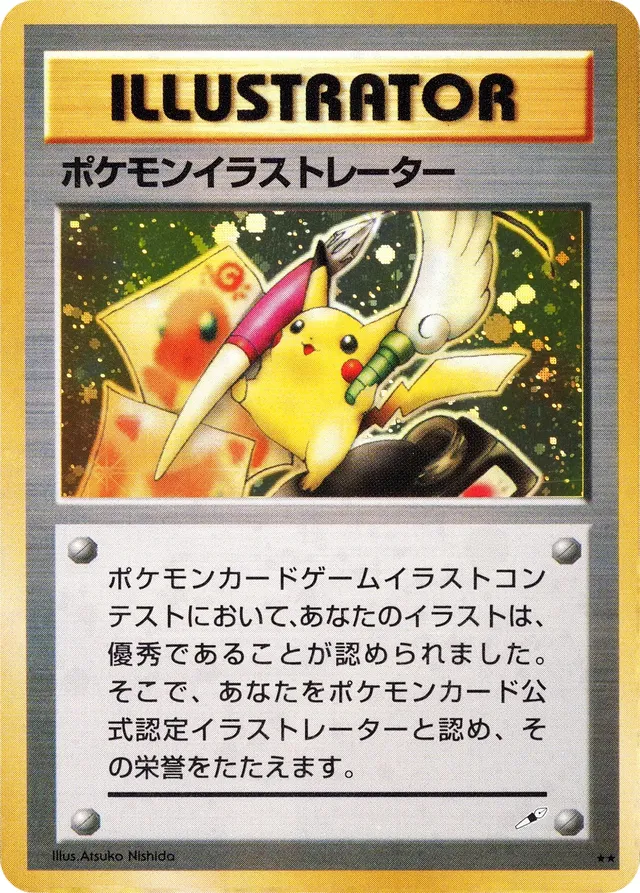 Pikachu Illustrator
Trophy & Legendary Promos · PSA 10
Goldin · 16 Feb 2026 · source
$16,492,000
Pikachu Illustrator
Trophy & Legendary Promos · PSA 10
Goldin · 16 Feb 2026 · source
$16,492,000
-
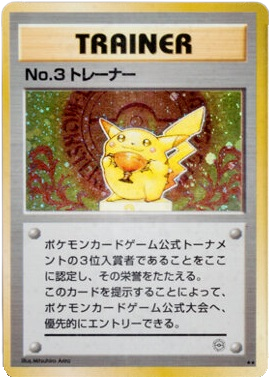 Trophy Pikachu No. 3 Trainer (Bronze)
1998 Japanese promo, 3rd Tournament · PSA 10 not in our database
Goldin · 18 May 2026 · source
$1,769,000
Trophy Pikachu No. 3 Trainer (Bronze)
1998 Japanese promo, 3rd Tournament · PSA 10 not in our database
Goldin · 18 May 2026 · source
$1,769,000
-
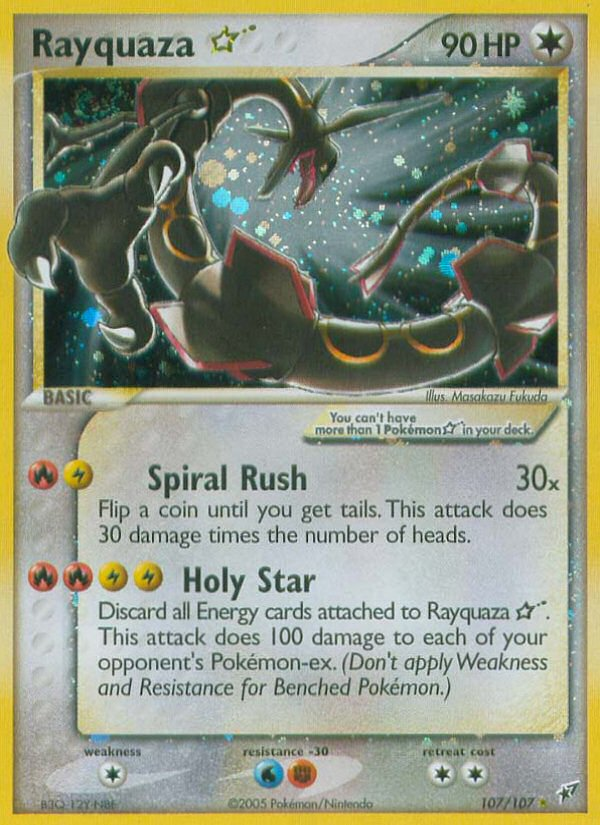 Rayquaza ★
Deoxys · CGC Pristine 10
Fanatics Collect · 28 Aug 2026 · source
$1,020,000
Rayquaza ★
Deoxys · CGC Pristine 10
Fanatics Collect · 28 Aug 2026 · source
$1,020,000
-
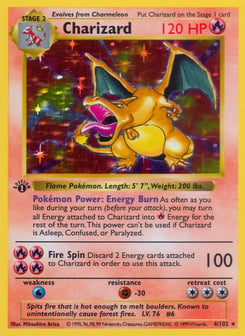 Charizard
Base · PSA 10
Goldin · 16 Feb 2026 · source
$954,800
Charizard
Base · PSA 10
Goldin · 16 Feb 2026 · source
$954,800
-
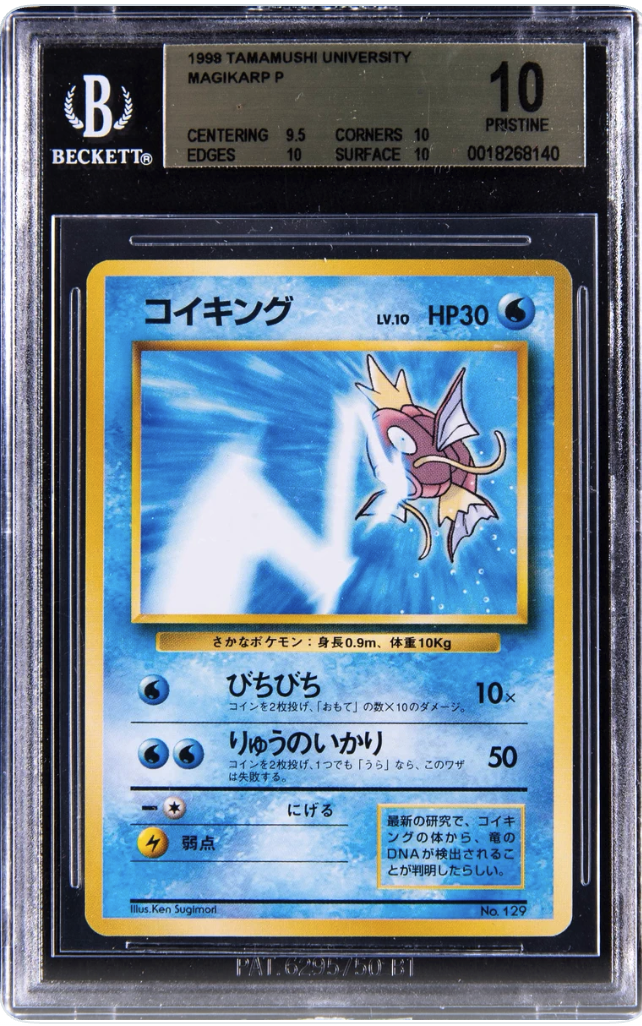 University Magikarp #129 (Tamamushi University Prize)
1998 Japanese promo · BGS Pristine 10 not in our database
Goldin · 16 Feb 2026 · source
$201,800
University Magikarp #129 (Tamamushi University Prize)
1998 Japanese promo · BGS Pristine 10 not in our database
Goldin · 16 Feb 2026 · source
$201,800
-
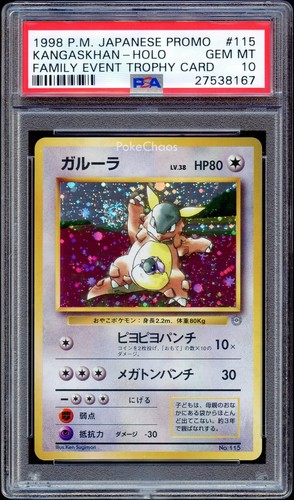 Family Event Trophy Kangaskhan
1998 Parent/Child Mega Battle promo · PSA 10 not in our database
Heritage Auctions · 1 Jul 2023 · source
$175,000
Family Event Trophy Kangaskhan
1998 Parent/Child Mega Battle promo · PSA 10 not in our database
Heritage Auctions · 1 Jul 2023 · source
$175,000
-
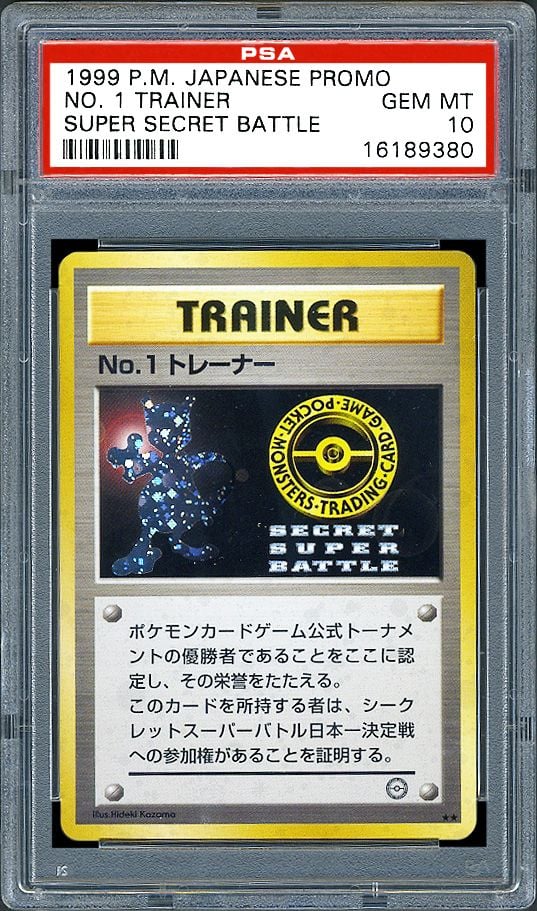 1999 Secret Super Battle No. 1 Trainer
1999 Japanese promo · PSA 10 not in our database
Heritage Auctions · 23 Sep 2022 · source
$156,000
1999 Secret Super Battle No. 1 Trainer
1999 Japanese promo · PSA 10 not in our database
Heritage Auctions · 23 Sep 2022 · source
$156,000
-
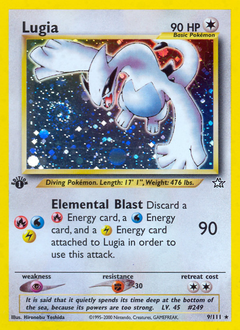 Lugia
Neo Genesis · BGS Pristine 10
Fanatics Collect · 1 May 2021 · source
$144,300
Lugia
Neo Genesis · BGS Pristine 10
Fanatics Collect · 1 May 2021 · source
$144,300
-
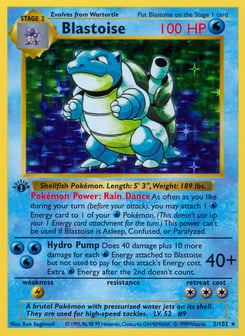 Blastoise
Base · PSA 10
Goldin · 16 Feb 2026 · source
$138,880
Blastoise
Base · PSA 10
Goldin · 16 Feb 2026 · source
$138,880
-
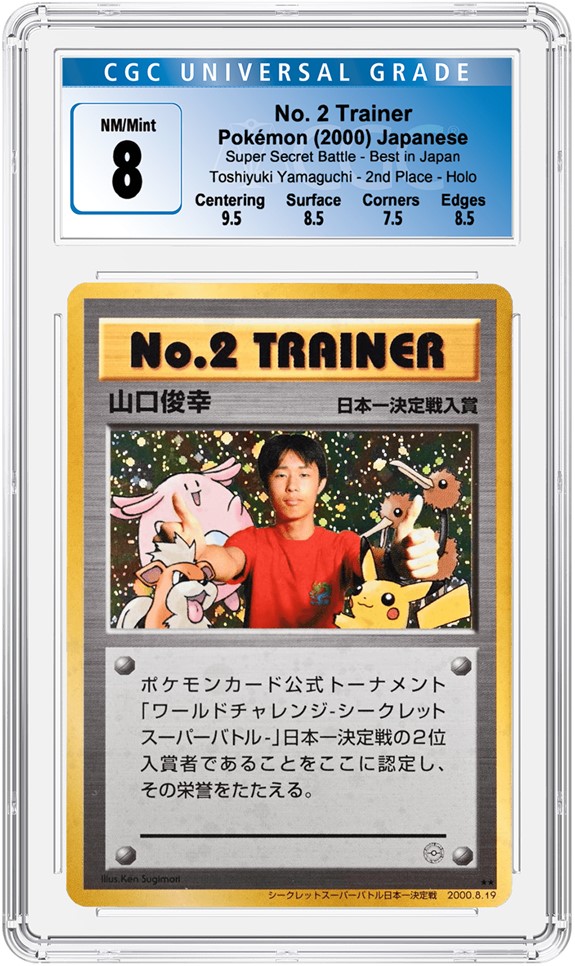 2000 Super Secret Battle No. 2 Trainer
2000 Japanese promo · CGC NM-MT 8 not in our database
Heritage Auctions · 7 Jul 2023 · source
$137,500
2000 Super Secret Battle No. 2 Trainer
2000 Japanese promo · CGC NM-MT 8 not in our database
Heritage Auctions · 7 Jul 2023 · source
$137,500
Every sale here is recorded by hand and linked to its source. Public auction results are listed as they stand; eBay and private sales are marked as such, because a reported private figure is not the same claim as a public auction result and should not rank beside one unmarked. Prices elsewhere on this site come from TCGplayer listings and completed eBay sales, which is why these are listed separately.
Why the Numbers Move Around
If you look up the sale price of an expensive Pokémon card, there is a good chance you will find several different numbers for what appears to be the same sale. That does not always mean one of the sources is wrong. More often, they are measuring slightly different things.
Buyer’s premium is one of the biggest reasons. Auction houses typically charge the buyer an additional fee on top of the winning bid, and that fee can add a substantial amount to a seven figure sale. The Pikachu Illustrator, for example, hammered at $13.3 million but reached $16.49 million after Goldin’s 24% buyer’s premium was included. Both numbers have been reported as the sale price, but only the second represents the total amount paid at auction.
Grade also matters enormously. A PSA 10 and PSA 9 may be the same card on paper, but at the top of the Pokémon market they should be treated as different collectibles. The difference can easily reach several multiples, particularly when the higher grade has an extremely small population. Comparing two sales without accounting for grade can make it look like a card suddenly gained or lost millions of dollars when the copies were never really comparable.
There is also a more basic problem: sometimes the cards being compared are not actually the same card. Trophy Pikachu is a good example. The No. 1 Trainer, No. 2 Trainer and No. 3 Trainer were different prizes with gold, silver and bronze designs. They came from different placements and can have dramatically different values, yet they are regularly grouped together under the same “Trophy Pikachu” name.
These differences become much more important when dealing with cards that rarely sell. There may not be another recent transaction available to correct a misleading comparison, so one incorrectly labeled card or one sale reported without its buyer’s premium can become the number repeated across dozens of websites.
When two credible sources report different figures, we do not simply choose the larger one. We explain the difference when we can identify it and note the discrepancy when we cannot. At this end of the market, understanding what actually sold is just as important as the headline price.