
Pokemon’s 30th Celebration release has already been surrounded by complaints about availability, delayed orders and products selling out almost immediately. Now Target is giving collectors another reason to be frustrated, this time with the pricing of two of the most anticipated products in the anniversary lineup.
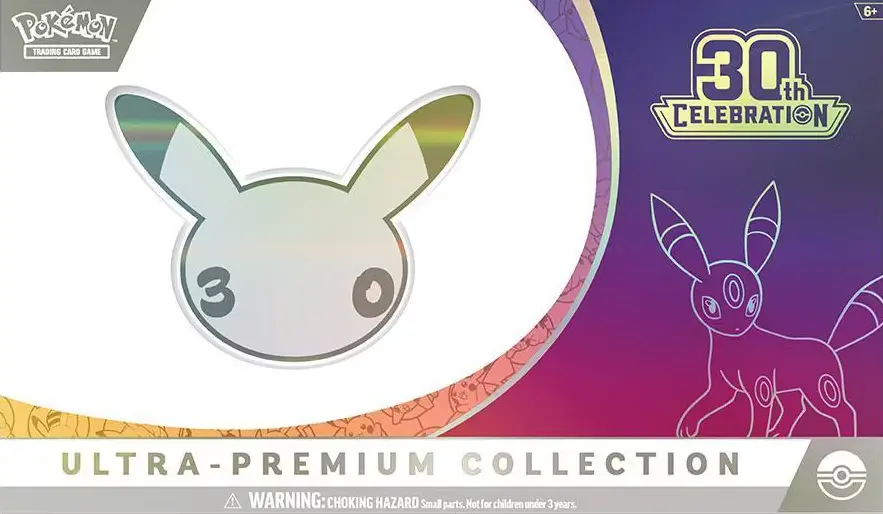
Target opened online preorders for the Pokemon TCG 30th Celebration Ultra Premium Collections on October 9, listing both the Day and Night versions for $249.99 each. That is approximately $70 above the widely reported $179.99 suggested retail price, representing a markup of nearly 39%.
The higher price didn’t appear to make the products any easier to purchase. Both listings showed out of stock following the preorder release, while collectors reported problems adding products to their carts and completing checkout.
For a major retailer like Target, which many collectors expect to offer Pokemon products at or near their suggested retail prices, the decision to list these collections at $250 raises some interesting questions. It also highlights a growing problem with high demand Pokemon releases: even when collectors manage to find a product at a major retailer, they aren’t necessarily getting it at the price they expected.
Target’s $250 Price Is the Bigger Story
The 30th Celebration Ultra-Premium Collections were already expected to be among the most difficult products to secure from the anniversary release. Both versions are scheduled for November 6, 2026, and contain a substantial amount of sealed product along with exclusive promotional cards and accessories.
Each collection includes 29 regular 30th Celebration booster packs and one Classic Collection pack. That makes these boxes particularly attractive to collectors who want to open a large number of packs without purchasing multiple smaller products.
However, there is a significant difference between paying $179.99 and $249.99 for essentially the same product.
At the reported MSRP, the collections are already expensive Pokemon products. At Target’s preorder price, buyers are paying another $70 before any applicable taxes or shipping charges. Someone purchasing both versions would spend approximately $500 instead of $360, a difference of $140.
That is a meaningful increase, especially for collectors who were planning to purchase both versions for their sealed collections or to obtain the exclusive promotional cards.
It is also worth separating suggested retail pricing from actual retail pricing. MSRP is a recommendation rather than a legally required selling price, and retailers generally have flexibility to set their own prices. Target charging more than the reported MSRP does not automatically mean anything improper is happening.
Still, it is unusual enough to deserve attention when a major national retailer lists a widely anticipated Pokemon product at such a substantial premium.
Collectors have become accustomed to seeing independent sellers and secondary market platforms charge more for difficult to find Pokemon products. Seeing that same kind of pricing from a retailer as large as Target is a different experience.
Collectors Report Checkout Problems as Preorders Disappear
The pricing controversy came alongside another familiar problem for Pokemon collectors: actually getting an order through.
Following the October 9 preorder release, collectors described problems adding the Ultra Premium Collections to their carts, encountering errors during checkout and seeing the products become unavailable before they could complete their purchases.
These reports are consistent with the frustration surrounding several major Pokemon releases over the past year. High-demand products can attract enormous traffic within minutes, and limited preorder inventory often disappears before many customers have a realistic opportunity to purchase anything.
However, the reports do not establish exactly what happened with Target’s checkout system. It is not clear how much inventory was made available, how many orders were successfully completed or whether automated purchasing contributed to the problems.
Those distinctions matter because a product selling out quickly does not necessarily mean bots were responsible. Demand alone can overwhelm a limited online release, particularly when thousands of collectors are waiting for the same product.
What we can say is that collectors were once again left frustrated by a preorder event that appeared to offer very little opportunity to secure the product.
And this time, some were being asked to pay substantially more than the expected retail price for that opportunity.
The 30th Celebration Distribution Problems Keep Adding Up
This is not the first time the 30th Celebration release has created frustration for collectors.
The anniversary products have been accompanied by reports of delayed shipments, canceled orders, rapidly disappearing inventory and difficulties securing products through major retailers. Some collectors have also complained about local card shops purchasing inventory from resellers and then offering products at secondary-market prices because traditional distribution channels could not provide enough stock.
Those issues have made the anniversary release particularly difficult to navigate, even for collectors who are simply trying to purchase products to open.
Target’s pricing adds another layer to that problem.
Collectors are already competing with substantial demand for the 30th Celebration lineup. When a major retailer lists one of the most desirable products above its reported MSRP, it creates another obstacle for buyers who were hoping to avoid secondary-market premiums.
The important question is whether this becomes an isolated pricing decision or something we start seeing more frequently across major retailers.
If other large retailers follow Target’s lead, the effective retail price of high-demand Pokemon products could become increasingly disconnected from the suggested price printed in product announcements.
That would be a meaningful change for collectors who have traditionally relied on major retailers as one of the more affordable ways to purchase sealed Pokemon products.
Does Paying $250 for the UPC Make Sense?
From a collector’s perspective, I would be careful about paying a substantial premium for these collections before they have even been released.
The Ultra Premium Collections contain a large number of packs, and the exclusive promotional cards will undoubtedly be part of the appeal. However, that doesn’t automatically make a $250 purchase a good value.
At $249.99, buyers are paying approximately $8.33 per included booster pack if the entire purchase price is divided across the 30 packs. That calculation does not assign any value to the promotional cards, accessories or packaging, but it illustrates how much of a premium is being placed on the overall collection.
At $179.99, the same calculation comes to approximately $6 per pack.
Of course, the Classic Collection pack and exclusive items make a direct comparison with ordinary booster packs imperfect. Some collectors may value the promotional cards enough to justify the higher price, while others may be more interested in keeping the entire box sealed.
The bigger issue is that we still don’t know how readily available these collections will be after their November release.
A difficult preorder does not necessarily mean the product will remain difficult to find. Pokemon products sometimes receive additional inventory after launch, and early secondary-market prices can change quickly once more supply reaches retailers.
That has been especially relevant with 30th Celebration, where enormous initial demand has not always translated into sustained prices for the cards inside the packs.
Collectors who missed Target’s preorder may be better served by waiting to see what other retailers offer rather than assuming $249.99 is the price they will have to pay.
Could Target’s Pricing Affect the Sealed Market?
There is another angle worth watching here, particularly for collectors who follow sealed Pokemon products.
When a major retailer lists a product above its suggested retail price, that listing can influence how buyers perceive the product’s value. A $250 preorder from Target may make a $275 or $300 secondary-market listing appear less unreasonable than it would have if Target were selling the same box for $179.99.
That doesn’t mean Target has established a new market value.
A retail listing is not the same as a completed secondary-market transaction, and an out-of-stock product page doesn’t tell us how many customers actually purchased the collection at that price.
Still, pricing from major retailers can influence expectations, particularly when the product is difficult to obtain elsewhere.
For PokeForecast, the more useful information will come after release, when we can compare actual completed sales, available inventory and the value of the exclusive cards against the price of the sealed collections.
If the boxes become widely available closer to MSRP, today’s $250 listing may end up looking like an expensive early preorder. If supply remains limited and secondary-market sales consistently exceed that figure, the market may eventually support a higher price.
Right now, neither outcome is guaranteed.
My Read
I think Target’s pricing is more significant than another Pokemon product selling out in a matter of minutes.
We’ve seen plenty of difficult preorder releases, and the 30th Celebration lineup has already given collectors more than enough reasons to complain about availability. What makes this different is that a major retailer is listing two highly anticipated Pokemon products approximately 39% above their widely reported suggested retail price.
That is a substantial premium, particularly when the products have not even reached their official release date.
I also wouldn’t assume that selling out at $249.99 proves collectors are comfortable paying that much. Without knowing how much inventory Target offered or how many orders were completed, there is no reliable way to measure demand at that price.
For collectors who missed the preorder, I wouldn’t rush to purchase either collection from a reseller. November 6 is still several weeks away, and there is time for other retailers to offer inventory or for additional preorder opportunities to appear.
The 30th Celebration release has already shown us how quickly excitement can push prices higher before enough supply reaches the market. We’ve seen that happen with individual cards, and sealed products are not immune to the same behavior.
What I’ll be watching now is whether other major retailers list the Day and Night Ultra Premium Collections closer to $179.99 or whether Target’s $249.99 price becomes more common.
That will tell us considerably more about the direction of the sealed market than another preorder selling out.