
Pokémon’s 30th Celebration officially releases today, and one of the set’s biggest surprises has already produced a five figure sale.
A raw Blue RGB Mew sold on eBay for $20,000 just before the worldwide release. The card was listed as Near Mint or better and sold through eBay’s Authenticity Guarantee program. It appears to be the first confirmed public sale of one of the three secret RGB Mew cards.
That is an incredible number for a raw modern Pokémon card, but it needs some context. There is currently only one confirmed sale to work with, almost no established supply and no reliable pull rate for the RGB Mews.
The $20,000 sale is real. Calling the Blue Mew a $20,000 card is much harder.
What Are the RGB Mew Cards?
The RGB Mews are three secret cards hidden inside 30th Celebration. There is a Red, Green and Blue version, all illustrated by YOSHIROTTEN and numbered R/RGB, G/RGB and B/RGB instead of using the normal set numbering.
The cards are a reference to the original Pokémon Red, Green and Blue games, but Pokémon took the idea further than simply creating another anniversary subset. The RGB Mews were intentionally left off the normal 30th Celebration checklist and do not appear in the card list included with the Elite Trainer Box.
That secrecy worked surprisingly well. The cards originally appeared through questionable early product openings, and collectors spent weeks debating whether they were even real. All three colors have since been pulled from actual product, and the cards were added to Pokémon TCG Live shortly before release.
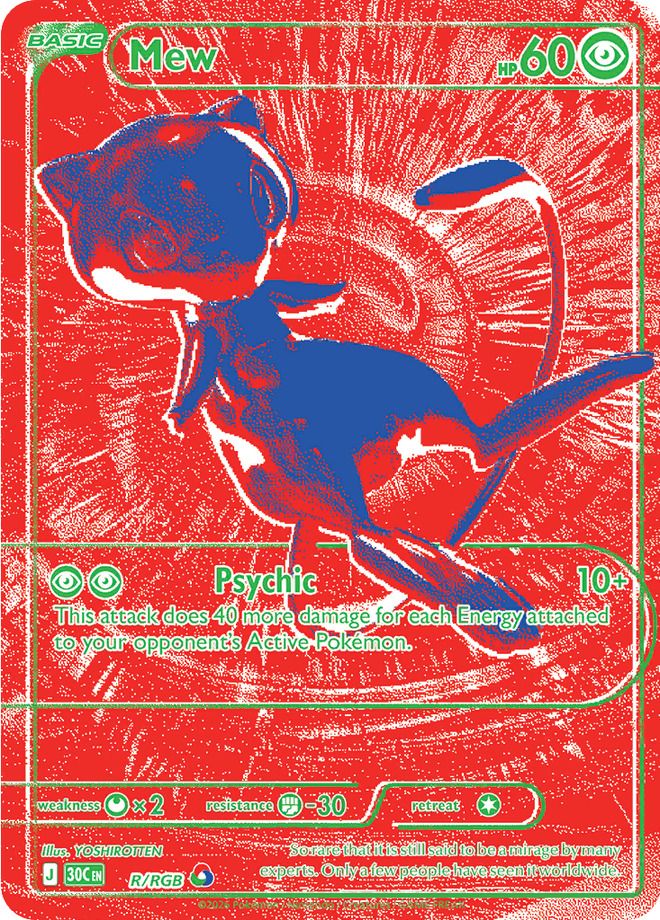
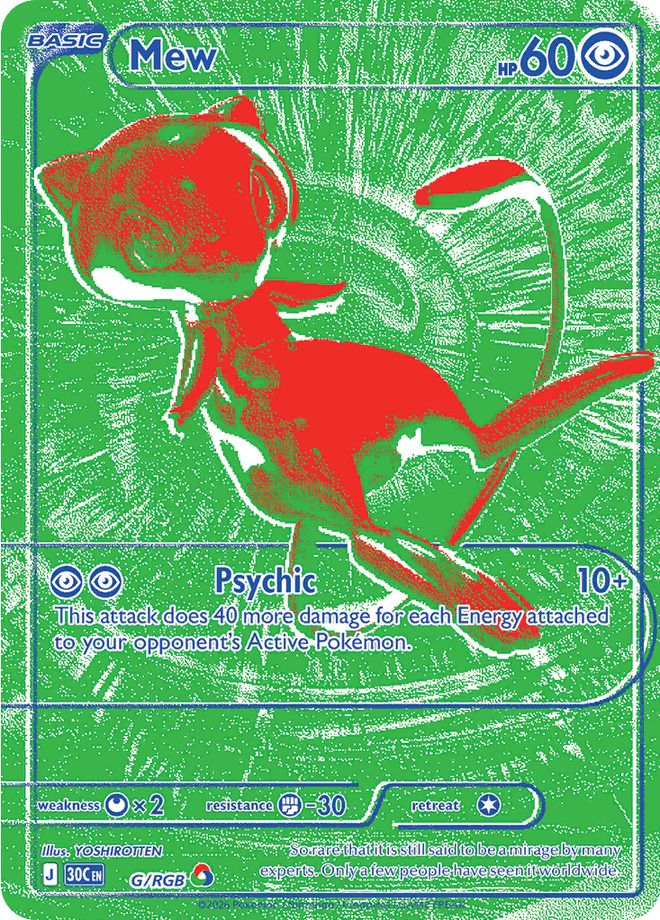
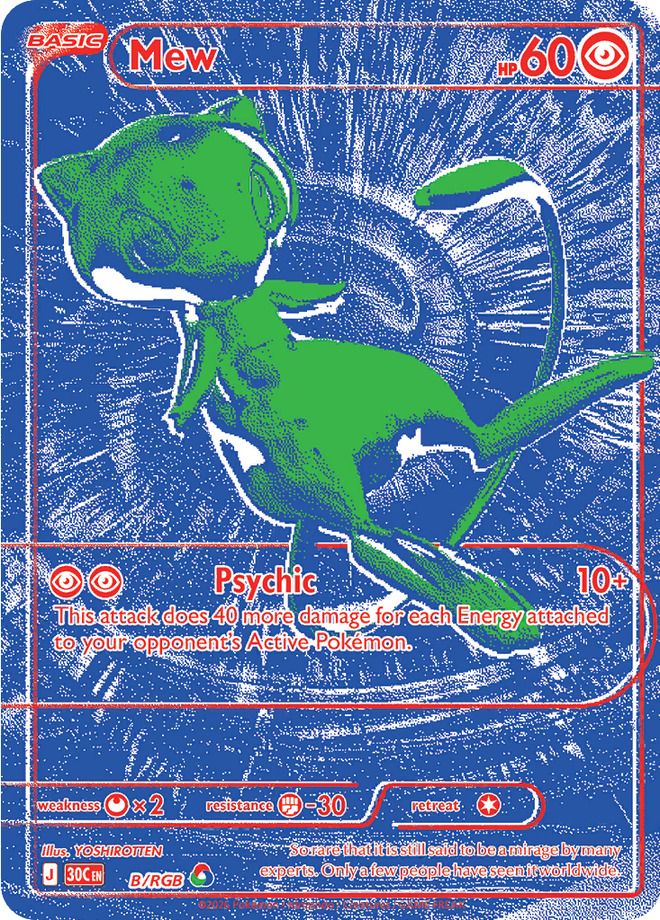
The mystery is gone. The scarcity question is not.
The $20,000 Sale Is Real, but the Market Barely Exists
The Blue RGB Mew sale gives us our first useful price point, but one transaction is nowhere near enough to establish market value.
That is especially true on release day.
There are still very few RGB Mews available compared with the number of collectors trying to buy them. Other copies have appeared with asking prices ranging from several thousand dollars all the way to $100,000, but asking prices tell us very little until someone actually pays them.
For now, $20,000 is the number that matters because a transaction actually happened.
What it tells us is that at least one buyer was willing to pay $20,000 to own a Blue RGB Mew before the market understood how much supply was coming. It does not tell us that the next copy will sell for $20,000, or that the Red and Green versions should automatically be valued the same way.
That distinction becomes even more important today because the supply situation is about to change quickly.
We Still Do Not Know the Pull Rate
The biggest unknown surrounding the RGB Mews is how difficult they actually are to pull.
A figure of roughly one RGB Mew in every 20,000 packs has circulated heavily online, but that number has not been confirmed by Pokémon and should not be treated as an established pull rate. There simply has not been enough English product opened to calculate reliable odds yet.
That should begin changing now.
30th Celebration officially releases worldwide today, which means the number of packs being opened is about to increase dramatically. Every large opening gives us another piece of data, and the number of RGB Mews that surface over the next several days will be much more useful than estimates made before release.
If thousands of boxes are opened and these cards remain extremely difficult to find, the $20,000 sale starts looking more interesting. If copies begin appearing much more frequently, the market will have to adjust.
This is exactly why I would not chase one at current prices.
First to Market Carries a Huge Premium
Pokémon collectors consistently pay a premium to own something first.
We see it with new sets, early PSA 10s and cards that reach the market before most collectors have even opened their first pack. There is simply more competition among buyers when only a handful of copies exist.
The RGB Mew is an extreme version of that situation.
Not only is 30th Celebration brand new, but these cards were intentionally hidden. They have the anniversary connection, an unusual design, three versions to collect and a story that has been building for weeks. There are also very few available.
That is almost a perfect environment for an enormous first sale.
The problem is that first to market scarcity usually disappears much faster than genuine card scarcity. We are about to find out which one is doing most of the work here.
The Three Card Set Could Help Demand
There is one part of the RGB Mew market that I think could matter longer term.
Pokémon made three of them.
Collectors who pull or buy the Blue Mew may naturally want the Red and Green cards to complete the set. That creates a different collecting dynamic than a single chase card because demand for one card can create demand for the other two.
The Red, Green and Blue theme also gives the cards an obvious display appeal. They were designed to be viewed together, and I expect complete RGB sets to eventually become a market of their own.
That does not guarantee five figure prices. Supply still matters more than anything else at this stage.
But it does give the cards something beyond rarity to support collector demand once the release week hype settles down.
The PSA Market Could Get Even More Extreme
Grading is going to make this market even more interesting.
If raw RGB Mews are already producing five figure transactions, the first PSA 10 copies could attract extraordinary prices. That does not necessarily mean those prices will be sustainable.
The first graded copies will have the same problem the raw market has today: almost no supply.
A population of three PSA 10s creates a completely different market from a population of 300. If the cards are difficult to grade or genuinely difficult to pull, that premium could remain substantial. If hundreds of clean copies eventually reach PSA, the early premium could shrink quickly.
We recently saw the same basic problem with Mega Darkrai ex. A tiny PSA 10 population created huge early valuations because collectors were competing for almost no available slabs. Population growth changes that equation.
With RGB Mew, the numbers could be even more extreme because the starting raw price is already so high.
What I Am Watching Now
The $20,000 sale gives us a starting point. The next seven days should tell us much more.
The most important number is not another asking price. It is how many RGB Mews actually surface as 30th Celebration is opened in volume.
I also want to see whether the three colors appear at roughly the same frequency. We should not automatically assume Red, Green and Blue have identical pull rates simply because they belong to the same group. If one version consistently appears less often, that could eventually create a meaningful price difference between them.
Then we need completed sales. If the next Blue Mew sells for $15,000, another for $12,000 and another for $8,000, we will quickly see the release premium coming out of the market. If multiple buyers continue paying around $20,000 while more packs are opened, the first sale becomes much more meaningful.
That is when we can start talking about an actual market.
My Early Read
The Blue RGB Mew selling for $20,000 is one of the most interesting early sales from Pokemon 30th Celebration, but I would be very careful about what we take from it.
The sale confirms that demand at the top of the market is enormous. Someone was willing to spend $20,000 on an ungraded modern Pokémon card before we even had reliable information about how difficult it is to pull.
What it does not confirm is a $20,000 market value.
Today is the first day that 30th Celebration supply really begins entering the market. Thousands of packs are going to be opened, more RGB Mews will surface and buyers will finally have alternatives to the handful of copies that appeared before release.
If these cards remain exceptionally difficult to pull after that happens, we may be looking at one of the most important modern Pokémon chase cards in years.
If they do not, $20,000 may simply become the price one collector paid to be first.
For now, I would record the sale and watch the supply. We finally have a starting price. We do not have a market yet.