
The same 1999 Base Set Charizard was printed in three different versions, and the price difference between them can be enormous. A First Edition Charizard graded PSA 10 has sold for hundreds of thousands of dollars, while an Unlimited copy in the same grade typically sells for a fraction of that amount.
At first glance, the cards look almost identical. They have the same artwork, attacks, and collector number. The differences come down to a small First Edition stamp and a shadow around the artwork, two details that are easy to miss if you don’t know where to look.
If you’re sorting through an old Pokemon collection, identifying the correct printing should be one of the first things you do. Looking up the wrong version can give you a completely unrealistic idea of what your card is worth.
The three printings, in the order they were made
1st Edition. The first print run, also known as the Base Set, from January 1999. Every card has a small black “Edition 1” stamp on the left side of the card, just below the artwork box. On Pokemon cards it sits to the left of the attack text; on trainers and energies it is in the same place relative to the picture. If the stamp is there, it is 1st Edition. These are the scarcest and the most valuable.
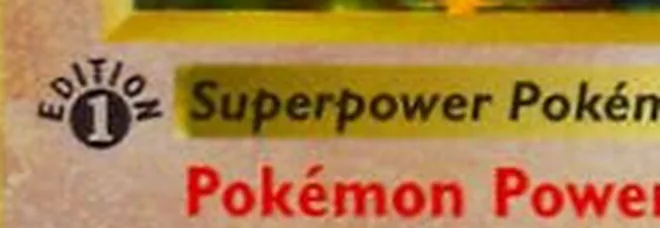
Shadowless. The second run, printed after the 1st Edition stamp was dropped but before the card design was changed. Same plates, no stamp. Shadowless cards exist only for Base Set; Jungle and Fossil went straight from 1st Edition to the later design.
Unlimited. Everything after that, which is the vast majority of Base Set in circulation. The print run went on for over a year and then Base Set 2 reprinted most of it again in 2000.
Here’s how the three compare:
| Feature | First Edition | Shadowless | Unlimited |
|---|---|---|---|
| Edition 1 stamp | Yes | No | No |
| Shadow around artwork | No | No | Yes |
| Relative scarcity | Highest | Middle | Lowest |
| Typical collector value | Highest | Middle | Lowest |
| Original English Base Set | Yes | Yes | Yes |
One important detail: every genuine English First Edition Base Set card is also Shadowless. The First Edition stamp was removed before the artwork frame was updated. If you come across a Base Set card with both the stamp and the later Unlimited shadow, that’s a warning sign.
How to tell Shadowless from Unlimited
The name says it. On an Unlimited card the artwork box has a drop shadow along its right and bottom edges, a thin grey line that makes the picture look raised. On a Shadowless card there is no shadow; the box is flat against the yellow border. Hold two cards side by side and it is obvious. On one card alone, look at the right edge of the picture frame. Flat means Shadowless.
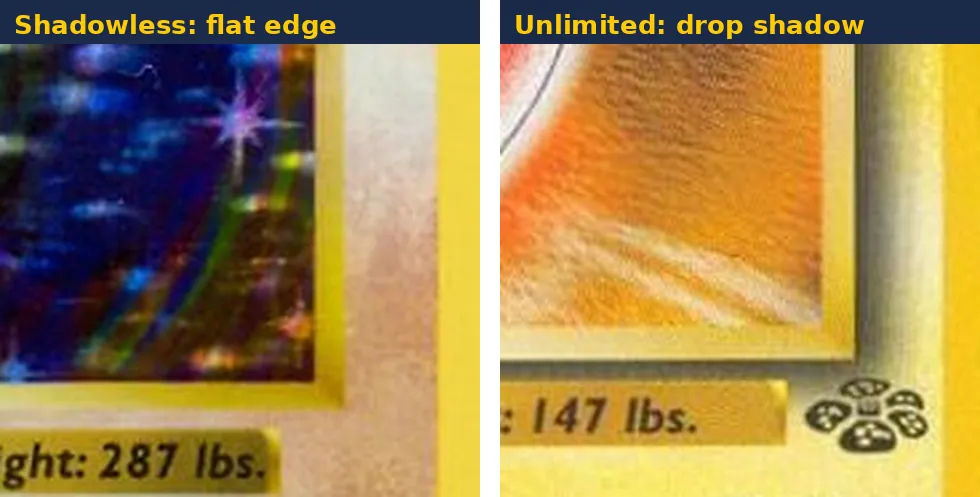
There are two more tells if the shadow is hard to read on a worn card. The HP on a Shadowless card is printed in a thinner red typeface; on Unlimited it is bold and heavier. And the copyright line at the bottom of a Shadowless card reads “1995, 96, 98, 99 Nintendo, Creatures, GAMEFREAK” with 1999 included; later Unlimited runs dropped the 99.
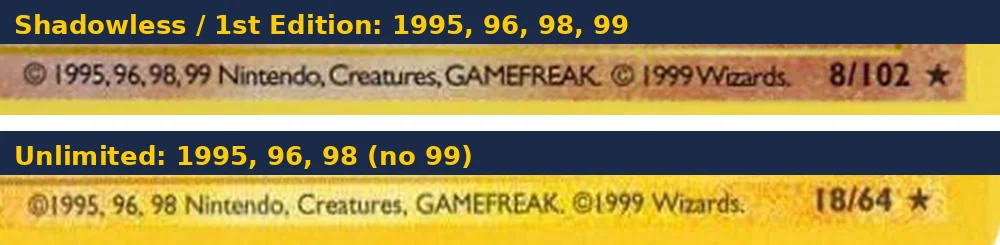
A 1st Edition Base Set card is always Shadowless as well, because the stamp came off before the shadow went on. So a card with the stamp and the shadow together is not a real 1st Edition Base Set card.
How Much More Are First Edition Pokemon Cards Worth?
Base Set Charizard #4/102 is probably the best example because there are enough sales across all three printings to see how much the market values them differently.
An ungraded Unlimited Charizard in decent condition can sell for hundreds of dollars. Shadowless copies often sell for considerably more, while First Edition examples can reach thousands or tens of thousands depending on condition.
Grading makes the differences even more dramatic. A PSA 10 First Edition Charizard has sold for hundreds of thousands of dollars, but that doesn’t mean every First Edition Charizard is worth anywhere near that amount. A heavily played copy with scratches, whitening, or creases belongs in a completely different price range.
The same applies to other Base Set cards. First Edition Blastoise and Venusaur generally carry premiums over their Shadowless and Unlimited counterparts, but condition still matters. A clean Unlimited holo can be worth more than a badly damaged First Edition copy.
Before pricing a card, make sure you’re comparing the same printing and similar condition. Recent completed sales are more useful than active eBay listings, where sellers can ask whatever they want.
You can check PokeForecast’s Base Set and Base Set Shadowless listings to compare cards and available pricing information. First Edition copies should be evaluated separately wherever sales data is available.
What About Jungle, Fossil, and Other Early Sets?
First Edition cards didn’t end with Base Set. The stamp continued through several early English Pokemon expansions, including Jungle, Fossil, Team Rocket, the Gym sets, and the Neo series.
Jungle and Fossil both have First Edition and Unlimited printings, but neither has a separate Shadowless version. For these sets, the stamp is the main thing to check.
Jungle also has a well-known printing error involving certain holographic cards that were released without the Jungle set symbol. Collectors call these No Symbol Jungle holos, and some carry a premium. They’re associated with Unlimited printings, so don’t mistake a missing set symbol for evidence that a card is First Edition.
Neo Destiny, released in 2002, was the last main English Pokemon expansion to receive a traditional First Edition printing. Later English sets abandoned the system, although some Japanese Pokemon releases continued using First Edition markings for years afterward.
That distinction matters when checking newer cards. A modern English Pokemon card advertised as First Edition in the original Wizards of the Coast style should immediately raise questions.
Watch Out for Fake First Edition Stamps
Because First Edition Base Set cards can sell for so much more than Shadowless copies, some counterfeiters have tried adding fake stamps to genuine Shadowless cards.
This can be difficult to catch from photographs because the two printings otherwise share the same design. A convincing stamp can make an ordinary Shadowless card appear to be worth considerably more.
Check the stamp’s position, lettering, and ink quality against a verified example of the same card. An unusually blurry or misplaced stamp is worth investigating, although legitimate printing variations do exist.
For an expensive First Edition purchase, I wouldn’t rely on the stamp alone. The cardstock, holographic pattern, printing details, and seller’s reputation all deserve attention. Professional authentication is worth considering when substantial money is involved.
Which Version Do You Have?
If you’re checking an old Base Set collection, start with the stamp. If there’s a genuine Edition 1 stamp, it’s First Edition. If there’s no stamp, examine the artwork frame. No shadow means Shadowless, while a grey shadow means Unlimited.
That’s enough to identify most standard English Base Set cards without any special equipment.
Our Pokemon card scanner can help identify the artwork and collector number, but similar-looking printings can sometimes be confused. Confirm the stamp and shadow yourself before relying on a price estimate.
It’s worth taking the extra minute, particularly with holographic cards. A Base Set Charizard may have the same artwork across all three printings, but the version you’re holding can make a difference of thousands of dollars.
And if you’re buying rather than selling, make sure the listing identifies the printing correctly. Paying a Shadowless price for an Unlimited card is an expensive mistake that’s easy to avoid once you know what to check.